Quick Navigation
What This Patong Beach Travel Guide Covers
- What Patong Beach Phuket really feels like beyond the stereotypes
- Why Patong became the tourism capital of Phuket
- The dramatic difference between Patong during daytime and after dark
- The reality of Bangla Road nightlife in 2026
- Best nightlife spots for solo travelers, couples, and party-focused tourists
- Late-night food culture around Soi Sansabai and Bangla Road
- Seafood restaurants, street food, food carts, and local Thai dishes worth trying
- The quieter side of Patong most tourists completely miss
- Best areas to stay depending on your budget and travel style
- Which hotels are best for nightlife, families, couples, or beach access
- Nearby beaches worth visiting including Freedom Beach, Kata, Karon, Kamala, and Nai Harn
- The reality of Patong traffic, scooters, tuk-tuks, and transportation costs
- Safety tips, tourist scams, and common mistakes first-time visitors make
- Phuket nightlife versus family-friendly attractions and entertainment
- Muay Thai stadiums, Phuket FantaSea, cabaret shows, and evening attractions
- Rainy season versus dry season in Patong and how the atmosphere changes
- The best day trips from Patong including Phi Phi Islands and Phuket Old Town
- Why Patong is simultaneously loved, criticized, exhausting, and unforgettable
- Whether Patong Beach is actually worth visiting in 2026
What Patong Beach Phuket Really Feels Like Beyond The Stereotypes
Before visiting Patong Beach, most travelers already think they know what it’s going to feel like.
That’s the strange thing about Patong.
The place arrives with a reputation long before most tourists ever step onto the beach itself.
People imagine:
- nonstop partying
- drunk tourists stumbling through Bangla Road
- loud clubs
- overcrowded beaches
- scams
- traffic
- flashing signs
- cheap cocktails
- chaotic nightlife
And honestly, some of that reputation is deserved.
Patong absolutely can feel chaotic. Especially for first-time visitors arriving directly from quieter places in Thailand.
The traffic moves aggressively. The streets remain active deep into the night. Music leaks from bars long before sunset. Tourists walk through the city carrying beach bags in one direction and hangovers in the other. During high season, the beach itself fills quickly while tuk-tuks crawl through crowded roads beneath tropical heat and humidity.
At first glance, Patong can feel almost overwhelming.
But what surprises many travelers is how quickly the city starts revealing layers beyond those stereotypes once they spend more than a day or two here.
Because Patong isn’t just “party Phuket.”
It’s more complicated than that. And strangely more human too.
The first thing many visitors notice is the contrast.
Not between good and bad…but between different versions of the same city existing simultaneously.
A luxury rooftop cocktail bar overlooking the bay sits only a few streets away from late-night noodle carts serving exhausted tourists at 2 AM. Families pushing strollers walk past backpackers heading toward Bangla Road while older European couples quietly eat seafood beside the beach watching the sunset as club promoters already begin preparing for the night ahead.
Everything overlaps here. Sometimes awkwardly. Sometimes beautifully.
And that overlap gives Patong far more personality than many travelers expect before arriving.
Because underneath the tourism machine, Patong still feels emotionally unpredictable.
One hour feels cinematic. The next feels exhausting. Then suddenly beautiful again.
A good example is the beach itself.
Online, people constantly debate whether Patong Beach is “too touristy,” “overrated,” or “not authentic enough anymore.” But standing on the shoreline during sunset tells a different story than reading internet opinions from thousands of miles away.
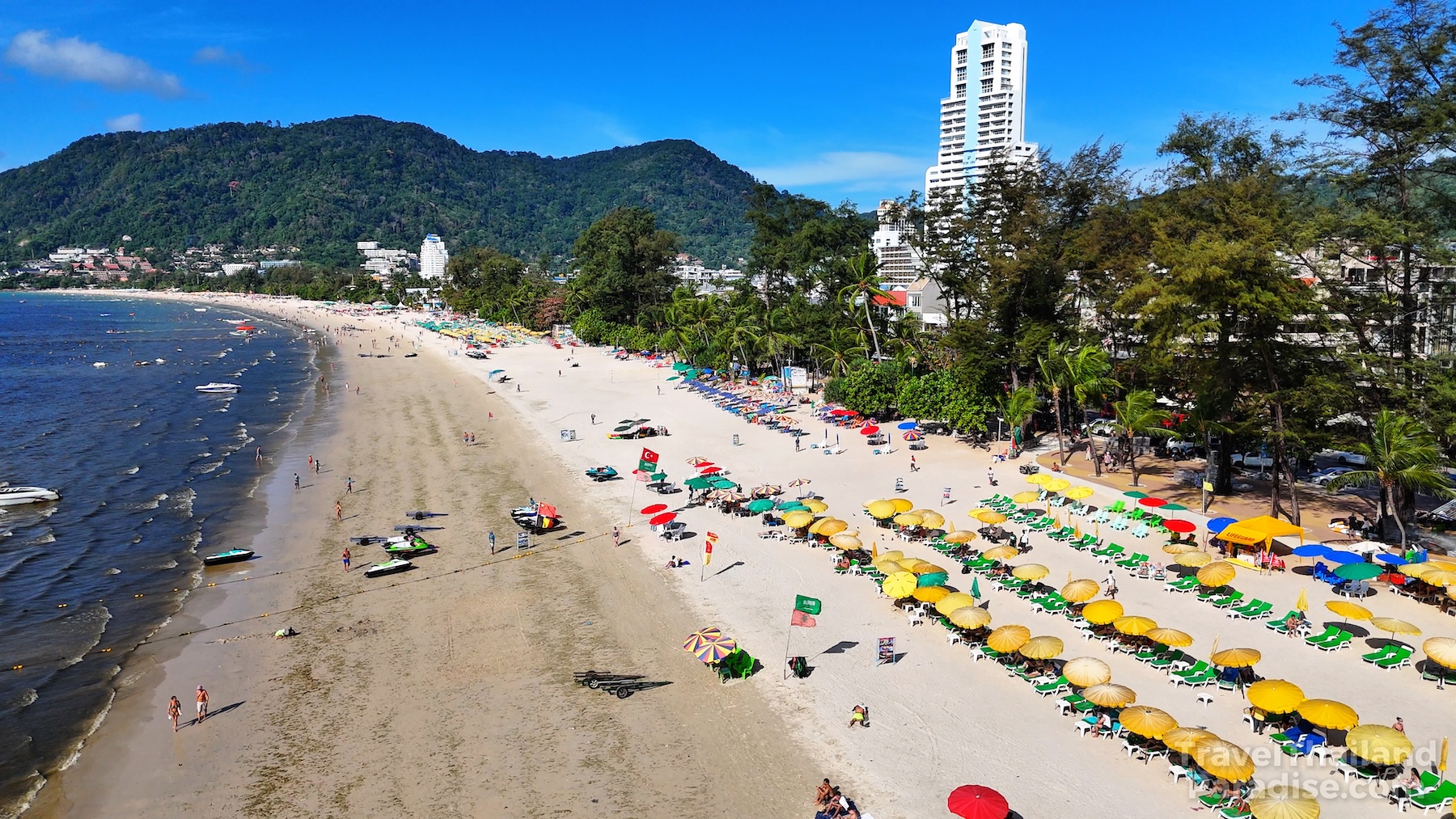
The bay curves naturally beneath green hills filled with hotels, palm trees, and apartment buildings while longtail boats drift offshore under changing light reflecting across the Andaman Sea. Children still run barefoot across the sand while travelers sit quietly watching parasails descend slowly toward the water before darkness settles over the beach.

For a few moments, Patong feels softer than its reputation. And those moments matter.
Because they reveal why millions of tourists continue coming despite endless criticism online about crowds and commercialization.
The city creates atmosphere. Not peaceful atmosphere necessarily. But atmosphere people remember.
Even the imperfections become part of the identity.
The traffic.
The humidity.
The crowded sidewalks.
The strange mixture of luxury tourism beside visible chaos.
Patong doesn’t try to hide what it became over the years.
Unlike destinations that carefully market themselves as untouched paradise while quietly struggling with overtourism underneath, Patong feels more honest about its identity.
It openly embraces tourism. Completely.
And somehow that honesty makes the city easier to understand.
Nobody comes here expecting silence. Nobody walks into Bangla Road believing they discovered hidden Thailand.
Patong exists almost entirely in the open. That transparency changes the emotional experience of visiting.
Instead of constantly searching for “hidden authenticity,” travelers often relax more once they stop expecting Patong to behave like a secluded tropical island.
Because it isn’t.
Patong operates more like a tropical entertainment city built beside a beach.
And once visitors accept that, the experience usually becomes far more enjoyable.
Especially for solo travelers.
Very few beach destinations in Southeast Asia feel this socially open. Sitting alone at a restaurant, rooftop bar, beach club, or street food stall rarely feels awkward because the city constantly attracts independent travelers from around the world.
Conversations start naturally here. Groups merge together easily. Travelers who planned quiet evenings often end up unexpectedly joining nightlife adventures, island tours, or beach trips with people they met only hours earlier.
That spontaneous social energy becomes addictive for certain visitors.
At the same time, Patong can absolutely become too much.
And many travelers eventually need breaks from it.
That’s why nearby beaches like Freedom Beach, Kamala, Kata, or Nai Harn feel so important emotionally within the Phuket experience. They create breathing room. They remind visitors that Phuket still contains quieter versions of tropical Thailand beyond the nightlife-heavy intensity surrounding Patong itself.
But strangely enough, many travelers still return to Patong afterward.
Even after escaping it.
Because once the city gets under people’s skin, it becomes difficult to fully replace.
There’s always something happening. Some new restaurant. Some rooftop view. Some late-night conversation beside a food cart.
Some storm rolling dramatically across the bay during sunset while music echoes faintly from streets behind the beach.
And unlike many tourist destinations that begin blending together after a while, Patong almost always leaves specific memories attached to it.
Not generic vacation memories. Detailed ones.
The smell of grilled seafood mixing with tropical rain. Scooters flooding wet roads after midnight. The strange silence near the beach at sunrise after a loud night before.
Watching first-time tourists step into Bangla Road looking completely overwhelmed.
Those small observations stay with people longer than expected.
And maybe that’s the biggest difference between Patong and its stereotypes.
The stereotypes only describe the surface.
The real experience feels far more layered once travelers spend enough time inside it.
Why Patong Beach Became The Tourism Capital Of Phuket
It’s easy to look at modern-day Patong Beach and assume it was always designed for tourism.
The giant hotels.
The nightlife streets.
The beach vendors.
The shopping centers.
The endless rows of restaurants, massage shops, rooftop bars, and tour agencies all packed tightly together beneath tropical heat and traffic.
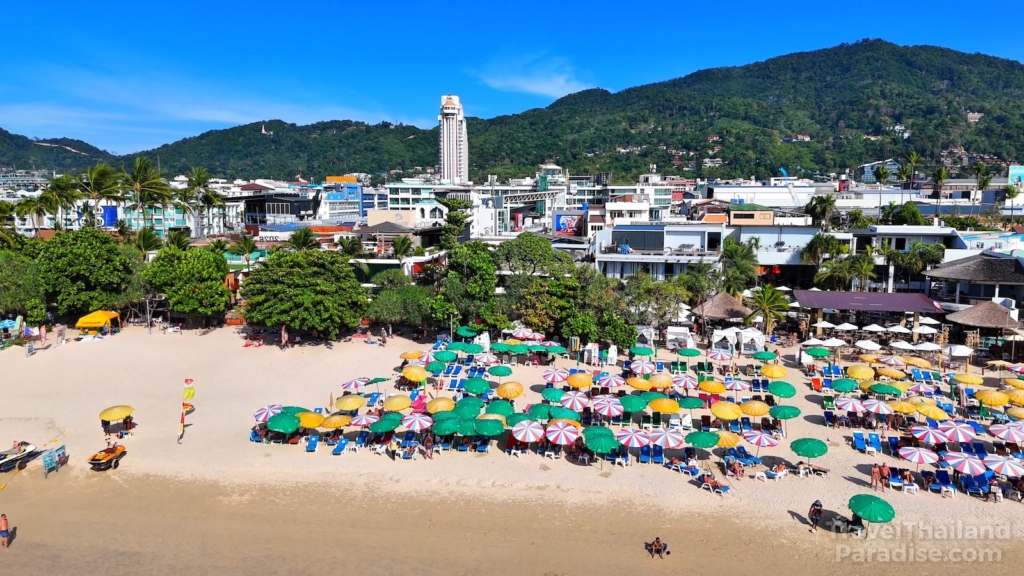
But Patong didn’t start that way.
Long before Phuket became internationally famous, this part of the island was relatively quiet compared to what travelers experience today. Fishing communities operated along sections of the coastline while the roads leading toward Patong remained rougher, narrower, and far less developed than modern Phuket highways packed with airport transfers and tourist vans.
Even reaching Patong once felt more isolated.
The surrounding hills naturally separated the bay from other parts of Phuket, which helped create the feeling of a hidden beach town before tourism exploded across southern Thailand.
Then gradually, everything changed.
Part of the transformation came down to geography.
Patong sits in a location that naturally works extremely well for tourism. The bay curves widely enough to support a large beachfront while still feeling visually dramatic beneath green hills surrounding the coastline. The beach itself stretches long enough to accommodate hotels, restaurants, nightlife, shopping, and beach activities all within walking distance of each other.
That convenience became incredibly important.
Unlike smaller beaches around Phuket where tourists often need transportation to move between restaurants, nightlife, hotels, and attractions, Patong concentrated nearly everything into one dense area. Visitors could spend the afternoon on the beach, walk back to the hotel, eat dinner, then continue directly into nightlife without needing taxis or organized transportation.
That walkability helped define Patong’s future.
Especially for international tourists.
As Phuket tourism grew throughout the 1980s, 1990s, and early 2000s, Patong naturally evolved into the island’s entertainment center because businesses quickly realized tourists staying here tended to spend more money and remain active far later into the night compared to quieter beach destinations.
Nightlife accelerated that transformation dramatically.
Once Bangla Road started gaining international attention, Patong stopped functioning only as a beach destination. It became known as Phuket’s social center — the place where tourists came for nightlife, parties, bars, clubs, and energy after sunset.
And once that reputation formed, tourism growth multiplied quickly.
Hotels expanded everywhere.
More restaurants opened.
Shopping districts developed.
Tour agencies flooded the streets selling island excursions toward Phi Phi Islands, James Bond Island, snorkeling tours, diving trips, and sunset cruises. Massage shops appeared beside cafés while rooftop bars slowly transformed sections of the beachfront skyline overlooking the bay.
Patong became a machine built around movement.
And importantly:
the city adapted extremely well to international tourism.
That’s one reason Patong eventually outgrew many smaller beach towns around Phuket in global recognition. Travelers from Europe, Australia, Russia, the Middle East, China, India, and America all found versions of Phuket that worked for them here.
Budget travelers found hostels.
Families found resorts.
Party tourists found Bangla Road.
Luxury travelers found hillside villas overlooking the Andaman Sea.
Patong somehow learned how to sell multiple versions of itself simultaneously.
That flexibility became one of its biggest strengths.
Even today, the city attracts completely different types of tourists occupying the same streets at the same time. A backpacker eating street food beside Soi Sansabai may spend less in one day than a luxury traveler ordering cocktails from an infinity pool overlooking the bay, yet both still exist inside the same tourism ecosystem.
Few places in Thailand balance that scale of tourism diversity as successfully as Patong.
Of course, growth also created problems.
And visitors feel those problems immediately now.
Traffic became heavier every year as tourism numbers exploded. The beachfront grew increasingly commercialized. Hotel construction spread across the hillsides surrounding the bay while parts of Patong started feeling overcrowded during peak season months.
Some longtime travelers argue the city lost part of its original charm because of that rapid expansion.
And honestly, there’s truth to that.
Patong today feels far more developed than the quieter beach destination many older travelers remember decades ago.
But at the same time, that development is exactly what turned Patong into Phuket’s tourism capital in the first place.
Because modern travelers expect convenience:
- Fast internet.
- Transportation.
- Nightlife.
- Shopping.
- International restaurants.
- Tour services.
- Beachfront resorts.
And Patong delivers those things better than almost anywhere else on the island.
That balance between tropical scenery and urban tourism infrastructure is difficult to build successfully.
Patong built it almost accidentally through momentum.
Then social media amplified everything even further.
Drone footage of the bay spread across YouTube. Bangla Road nightlife clips exploded on TikTok and Instagram. Travel vloggers turned Phuket into one of Southeast Asia’s most recognizable tourism destinations online, and Patong naturally became the visual symbol most associated with modern Phuket tourism.
For better or worse.
And once millions of people around the world repeatedly see the same nightlife streets, beach sunsets, rooftop pools, and tropical drone shots online, curiosity grows automatically.
People want to experience it themselves.
That cycle continues fueling Patong’s tourism economy every year.
Especially because the city photographs extremely well.
The contrast between beach life and nightlife creates visually strong travel content almost everywhere. Sunset drone footage overlooking the bay transitions naturally into neon-lit nighttime scenes only a few streets away. Few destinations compress such dramatically different atmospheres into one relatively small geographic area.
That contrast became Patong’s identity.
And ultimately, that identity is what separated Patong from every other beach in Phuket.
Not because it was the quietest.
Or the cleanest.
Or the most authentic.
But because it became the most alive.
The Dramatic Difference Between Patong During Daytime And After Dark

Some beach destinations feel relatively the same all day long.
The atmosphere changes slightly after sunset, maybe a few restaurants become busier, some bars fill with tourists, music gets louder for a few hours, then everything gradually quiets down again.
Patong Beach does not work like that.
Patong transforms.
Not subtly.
Completely.
And the shift begins earlier than many first-time visitors expect.
During daytime, especially in the morning, Patong still carries traces of a tropical beach town underneath all the tourism infrastructure. The beach itself becomes the center of attention while tourists move more slowly through the city wearing swimwear, carrying towels, ordering smoothies, and searching for shade beneath the heavy Phuket heat.
The pace feels relaxed at first.
Beach umbrellas line the shoreline while travelers drift between cafés, shopping centers, massage shops, beachfront restaurants, and island-tour booths selling snorkeling trips toward Phi Phi Islands or James Bond Island.
The ocean dominates the atmosphere during daylight hours.
You hear:
- waves
- longtail boat engines offshore
- beach vendors calling softly to tourists
- music drifting from beach clubs
- parasailing boats moving across the bay
The city still feels busy…
but not intense yet.
Even Bangla Road during daytime can feel strangely ordinary compared to its nighttime reputation. Delivery scooters move through the street while restaurant staff prepare tables and workers unload supplies beneath signs that look almost harmless under direct sunlight.
First-time visitors often walk through Bangla Road during daytime thinking:
“This is what everyone was talking about?”
Then nighttime arrives.
And suddenly the entire area feels almost unrecognizable.
The transformation usually starts around sunset.
The beach slowly empties while tourists return toward hotels to shower before dinner or nightlife. Street vendors begin setting up evening food stalls while bars start raising music volume across different parts of Patong.
The city feels like it’s preparing for something.
Traffic becomes heavier.
The humidity softens slightly.
Restaurant lights begin reflecting across wet pavement after short tropical rain showers.
And then Bangla Road closes to vehicle traffic.
That’s when Patong fully changes personality.
The same street that felt almost unimpressive during daytime suddenly explodes with movement, music, flashing lights, giant illuminated signs, club promoters, dancers, tourists, and bass-heavy music shaking the buildings late into the night.
The contrast catches many travelers off guard.
Especially visitors arriving in Phuket for the first time.
During daytime, Patong feels built around the beach.
At night, it feels built around stimulation.
The senses get overloaded quickly.
Different songs collide from multiple directions at once while tourists stop constantly to photograph signs, street performers, clubs, and crowds moving through the nightlife district beneath neon lights reflecting off humid streets.
And unlike daytime Patong, nighttime Patong feels unpredictable.
That unpredictability becomes part of the attraction.
One street may feel upscale and polished with rooftop cocktails and seafood restaurants overlooking the bay. A few minutes later, tourists walk into loud nightlife zones where club promoters aggressively advertise drink specials beneath giant LED screens flashing through clouds of cigarette smoke and humid air.
The city stops feeling tropical in the traditional sense.
It starts feeling cinematic instead.
Especially after rain.
Heavy tropical storms sometimes pass through Phuket during evening hours, and once the rain finally slows, Patong can look almost surreal beneath glowing signs reflecting across wet roads while steam rises from sidewalks still holding heat from earlier in the day.
Scooters cut through puddles.
Tourists carry umbrellas between bars.
Music continues despite the weather.
Nothing fully stops.
That nonstop momentum separates Patong from quieter Phuket beaches like Kamala, Kata, or Nai Harn where evenings slow down naturally after sunset.
Patong accelerates after dark.
And the people change too.
Families mostly disappear from Bangla Road later at night while younger crowds, solo travelers, backpackers, nightlife tourists, and groups celebrating birthdays or holidays gradually take over the streets. Travelers who looked exhausted beneath the afternoon heat suddenly reappear dressed for clubs, rooftop bars, beach parties, or Muay Thai events.
The city becomes more performative at night.
More exaggerated.
Even ordinary interactions feel different.
Street food vendors cook faster because crowds grow heavier. Tuk-tuk drivers become more aggressive searching for customers leaving nightlife areas. Clubs increase music volume trying to pull tourists inside before neighboring venues steal attention away.
Everything competes for attention after dark.
And honestly, some travelers hate it almost immediately:
- The noise.
- The crowds.
- The chaos.
- The sensory overload.
Patong nightlife absolutely becomes too intense for certain visitors, especially travelers expecting peaceful island evenings or traditional Thai beach-town atmosphere.
But others become completely absorbed by the energy.
Especially solo travelers.
Because despite all the chaos, nighttime Patong also feels strangely social. People talk more openly. Groups merge together naturally. Conversations begin easily between strangers waiting for street food or standing outside bars watching crowds flow through Bangla Road beneath flashing lights and giant screens.
The city creates interaction constantly.
And even tourists who claim they “aren’t nightlife people” often end up staying out later than planned simply because the atmosphere keeps pulling them deeper into the streets.
That’s the strange thing about Patong.
Daytime and nighttime almost feel like two separate destinations sharing the same geography.
One side revolves around beaches, sunsets, smoothies, island tours, cafés, and ocean views.
The other revolves around nightlife, crowds, movement, sound, and sensory overload stretching deep into the night.
Neither version fully explains Patong alone.
The city only starts making sense once travelers experience both.
The Reality Of Bangla Road Nightlife In 2026
By now, Bangla Road has become larger than just a nightlife street.
It’s a symbol.
For some travelers, it represents freedom, partying, chaos, and unforgettable nights in Thailand.
For others, it represents everything they dislike about overtourism.
And honestly, both perspectives contain truth.
The first thing many visitors notice in 2026 is how international Bangla Road feels now. Walking through the street late at night no longer feels like entering a “Thai nightlife area” specifically. It feels more like a global tourism crossroads compressed into a few neon-covered blocks beneath loud music and humid tropical air.
You hear:
- Russian
- English
- Arabic
- French
- Hindi
- Mandarin
- German
sometimes all within a few minutes.
The street constantly shifts depending on season, tourism waves, international holidays, and flight patterns into Phuket. Some weeks feel dominated by Australian tourists. Other times Russian families and long-stay travelers become far more visible. Middle Eastern tourism has also grown heavily around Phuket in recent years, changing parts of the nightlife and restaurant scene around Patong itself.
That global mix creates an atmosphere unlike almost anywhere else in Thailand.
But Bangla Road in 2026 also feels more commercialized than ever.
Almost everything competes aggressively for attention:
- clubs
- rooftop bars
- cannabis lounges
- live music venues
- street performers
- seafood restaurants
- cocktail bars
- promoters
- LED billboards
Some travelers love the overstimulation.
Others feel exhausted within thirty minutes.
And honestly, there’s no “correct” reaction.
Bangla Road is intentionally overwhelming.
That’s the business model.
The clubs themselves have evolved too.
Illuzion Phuket still dominates the large-scale nightclub scene with international DJs, giant LED walls, dancers, smoke effects, and crowds packed tightly beneath heavy bass music late into the night. It feels polished, highly produced, and visually closer to major European nightlife destinations than traditional Southeast Asian nightlife culture.
Barfunk Phuket attracts a younger, highly energetic crowd looking for open-air party atmosphere directly connected to Bangla Road itself. The music leans heavily toward commercial EDM, dance remixes, and mainstream party tracks while the crowd constantly spills into the street outside.
Tai Pan Nightclub still carries a more classic Phuket nightlife feel — slightly older-school, less visually overwhelming, but often easier for first-time visitors who don’t necessarily want mega-club intensity immediately. The music usually mixes commercial dance tracks, hip-hop, and international party music familiar to tourists from Europe and Australia.
Hip-hop fans usually gravitate toward Sugar Club Phuket, which built a strong reputation around rap, hip-hop, R&B, and urban nightlife culture. Compared to some of the EDM-heavy clubs nearby, Sugar Club feels darker, more performance-oriented, and more focused on stage energy and crowd interaction.
But not every nightlife experience in Patong revolves around giant clubs.
Some of the most enjoyable nights actually happen inside smaller live music bars where the atmosphere feels more relaxed and social.
New York Live Music Bar became well known for exactly that reason. Instead of giant production and overwhelming visuals, the attraction here comes from live bands playing rock classics, pop songs, and familiar international music while tourists sit drinking beers, singing along, and escaping the heavier nightclub intensity outside.
That softer nightlife side of Bangla Road often surprises people.
Because despite the reputation, not everybody comes here searching for all-night clubbing. Some travelers simply want live music, conversation, street atmosphere, and a few drinks while people-watching from open-front bars beside the street.
And honestly, the atmosphere between venues often becomes more memorable than the clubs themselves.
That’s what many tourists actually remember afterward:
- walking through humid crowds after midnight
- stopping for late-night food beside Soi Sansabai
- hearing five different songs colliding together
- watching tourists negotiate tuk-tuks at 3 AM
- rain suddenly flooding the street before disappearing again twenty minutes later
The nightlife becomes more about movement than destinations.
At the same time, tourists absolutely need realistic expectations.
Bangla Road is not:
- authentic local Thailand
- hidden Phuket
- cultural immersion
It’s tourism entertainment on a massive scale.
And once visitors understand that, the experience usually becomes more enjoyable because expectations align with reality.
The biggest mistake people make is expecting either:
- a dangerous dystopian party street
OR - a magical tropical nightlife paradise
The truth sits somewhere in between.
Bangla Road can be incredibly fun with the right mindset.
But it can also become:
- overpriced
- exhausting
- repetitive
- chaotic
especially if travelers stay inside the nightlife bubble every single night without exploring other parts of Phuket.
That balance matters.
Because Bangla Road works best as part of the Phuket experience…
not the entire experience itself.
And honestly, that’s probably the real reality of Bangla Road in 2026:
Not a place people visit searching for authenticity.
A place people visit searching for energy.
Best Nightlife Spots For Solo Travelers, Couples, and Party-Focused Tourists
One of the reasons Patong Beach became so internationally famous is because the nightlife doesn’t revolve around only one type of traveler.
That’s important.
Some nightlife destinations feel designed exclusively for hardcore partying. Others cater mostly to luxury travelers or couples looking for rooftop cocktails and quiet dinners.
Patong somehow mixes everything together.
And depending on where visitors go after dark, the experience can feel completely different.
For solo travelers, Patong remains one of the easiest places in Thailand to meet people naturally. The city constantly pulls tourists into shared spaces — rooftop bars, hostels, live music venues, food markets, clubs, beach bars, and open-front bars lining Bangla Road itself.
Nobody looks strange being alone here.
That changes the atmosphere immediately.
Places like Barfunk Phuket work especially well for solo travelers because the venue feels socially open rather than isolated around VIP tables. The crowd spills directly toward Bangla Road while commercial dance music and EDM remixes keep the energy moving constantly.
It’s easy to walk in alone and end up talking to people within minutes.
Illuzion Phuket attracts a slightly different nightlife crowd. The venue feels massive, highly produced, and internationally polished with giant LED screens, dancers, smoke effects, and internationally known DJs during major events.
For tourists looking for “big nightclub energy,” Illuzion usually becomes the centerpiece of the night.
Especially during peak season.
But some solo travelers actually prefer smaller bars and live music venues because they feel less overwhelming socially.
That’s where places like New York Live Music Bar become popular. Instead of giant nightclub production, the atmosphere revolves more around:
- classic rock covers
- pop songs
- beer towers
- casual conversations
- tourists singing along together late into the night
The environment feels easier to settle into.
Less pressure.
Less chaos.
And honestly, many travelers end up staying longer in places like this than they originally planned because the atmosphere feels more natural than constantly fighting through nightclub crowds.
Couples experience Patong nightlife very differently.
Some absolutely love it.
Others walk through Bangla Road once and immediately decide quieter rooftop bars or beachfront restaurants fit their vacation better.
And honestly, both reactions are understandable.
Patong can feel romantic…
but not always in the obvious way.
The best nightlife experiences for couples often happen outside the loudest sections of Bangla Road entirely:
- rooftop cocktails overlooking the bay
- beachfront seafood dinners
- sunset lounges
- quieter cocktail bars
- live music venues after midnight rainstorms cool the air slightly
Those moments feel completely different from the stereotype most people imagine before arriving in Phuket.
Still, many couples eventually end up walking through Bangla Road at least once simply because the atmosphere feels impossible to ignore. Even travelers who aren’t interested in clubs usually become curious enough to experience the energy for themselves.
For party-focused tourists though, Patong becomes something else entirely.
Fire Show on the beach at Nighttime in Patong Beach

The city turns into a full nightlife playground.
People move between clubs until sunrise while streets remain crowded deep into the night with tourists searching for:
- DJs
- hip-hop clubs
- EDM venues
- live music
- rooftop bars
- afterparties
- late-night food
Sugar Club Phuket attracts many hip-hop fans looking for a darker, more urban nightlife atmosphere compared to the EDM-heavy clubs nearby. The crowd tends to feel younger while live performances, rap music, and bass-heavy sets dominate much of the night.
Meanwhile Tai Pan Nightclub continues attracting tourists who want nightlife energy without the massive scale and sensory overload of places like Illuzion. The music stays more familiar and commercial while the overall layout feels easier for first-time visitors to navigate.
And honestly, nightlife in Patong often works best when tourists avoid overplanning everything.
Some of the best nights happen unexpectedly.
A short stop for street food turns into drinks with strangers. One live music bar leads to another. Rain suddenly traps tourists beneath open-air bars while entire groups begin talking simply because nobody can leave yet.
Patong nightlife feels messy sometimes.
But that unpredictability becomes part of its identity.
At the same time, visitors absolutely need common sense.
Drink prices vary heavily. Some bars aggressively target tourists unfamiliar with Phuket nightlife. Taxi pricing late at night can become frustrating. And like anywhere heavily built around tourism and alcohol, awareness matters.
But for travelers approaching Patong with realistic expectations, the nightlife can become one of the most memorable parts of visiting Phuket.
Not because it feels authentic.
Because it feels alive.
Late-Night Food Culture Around Soi Sansabai and Bangla Road
Long after the beach empties…
long after sunset disappears behind the hills surrounding Patong Beach…
and long after most quieter Phuket beaches have already gone silent for the night…
Patong keeps eating.
That’s one of the first things many visitors notice after spending enough nights around Bangla Road and Soi Sansabai.
The city never really shuts down.
Especially the food.
Around midnight, the atmosphere changes completely from daytime beach tourism. The tropical heat softens slightly while the nightlife crowds become heavier, louder, and far more unpredictable. Tourists spill out from clubs carrying beers, cigarettes, shopping bags, sandals in their hands, or simply the exhausted look of people who have been awake too long in humid weather.
And eventually, almost everybody ends up searching for food.
That’s when Soi Sansabai becomes one of the most interesting streets in Patong.
During daytime, the road feels relatively ordinary compared to the chaos nearby. A few restaurants operate quietly while scooters move through traffic carrying deliveries beneath tangled power lines and hotel signs.
At night, the entire street changes personality.
Smoke rises from grills while food carts line sections of the sidewalks serving:
- grilled chicken skewers
- seafood
- fried rice
- spicy noodles
- kebabs
- banana pancakes
- burgers
- mango sticky rice
- shawarma
- smoothies
- pad thai
The smell hits first.
Garlic frying in oil.
Seafood cooking over charcoal.
Sweet condensed milk melting into fresh roti pancakes.
Chili smoke drifting through humid air while tourists crowd around plastic tables eating beside passing scooters and flashing nightlife signs.
And unlike some heavily curated tourist markets around Southeast Asia that feel almost staged for social media, late-night food culture in Patong still feels slightly messy.
Which honestly makes it better.
People stand eating directly beside the street while delivery scooters squeeze through tiny openings between tourists waiting for takeaway containers. Restaurant staff shout table numbers while drunk travelers attempt ordering food at 2 AM after leaving Bangla Road clubs nearby.
Nobody looks elegant.
And that’s part of the atmosphere.
Patong after midnight feels less polished than many luxury Phuket advertisements suggest.
But it feels alive.
That’s especially true around Soi Sansabai because the street attracts completely different types of people at the same time:
- backpackers searching for cheap late-night meals
- couples leaving rooftop bars
- nightlife tourists recovering from heavy drinking
- delivery drivers grabbing quick food between orders
- hotel workers finishing shifts
- travelers trying to sober up before returning to hotels
Everything overlaps.
And unlike quieter parts of Phuket where evenings slow down naturally after sunset, Patong food culture actually intensifies deeper into the night.
Some restaurants remain open until sunrise.
Others never seem to close at all.
Even around 3 AM, tourists still sit eating noodles beneath fluorescent lights while music from Bangla Road echoes faintly through nearby streets.
The food itself ranges heavily in quality.
Some places clearly focus more on speed than flavor because the nightlife crowds mostly care about convenience after midnight. But hidden between the louder tourist-focused restaurants are smaller spots serving genuinely excellent Thai food at surprisingly reasonable prices considering Patong’s tourism economy.
That’s one thing many visitors learn quickly:
the best food often sits slightly away from the busiest streets.
A small local restaurant hidden behind Bangla Road may serve far better pad kra pao or tom yum than a flashy seafood place directly beside the nightlife crowds charging double the price.
And seafood remains a huge part of Patong’s nighttime atmosphere.
Large displays of prawns, crab, lobster, squid, oysters, and fresh fish sit over crushed ice beneath bright lights trying to attract tourists walking between bars and restaurants. Some travelers happily spend large amounts on seafood dinners overlooking busy streets or beachfront sections of Patong while others stay loyal to smaller noodle shops and street carts costing only a fraction of the price.
Both experiences feel very Phuket.
And honestly, the late-night eating culture becomes one of the strongest memories many tourists carry home afterward.
Not necessarily because the meals were life-changing.
Because the atmosphere was.
The humidity.
The noise.
The mixture of music, traffic, smoke, conversation, and exhaustion drifting through Soi Sansabai long after midnight while strangers from completely different parts of the world sit beside each other eating street food beneath glowing signs and tangled wires.
Those moments feel uniquely Patong.
Not peaceful.
Not glamorous.
But unforgettable in a strangely human way.
Seafood Restaurants, Street Food, Food Carts, and Local Thai Dishes Worth Trying
One thing visitors quickly realize about Patong Beach is that food exists everywhere.
Not hidden in specific tourist zones.
Everywhere.
A seafood restaurant sits beside a smoothie stand. A late-night noodle cart operates only a few meters away from rooftop cocktail bars while small Thai kitchens hidden behind busy streets quietly serve some of the best meals in Patong without most tourists even noticing them.
That variety becomes part of the experience itself.
Especially for travelers spending several days in Phuket.
Seafood naturally dominates large sections of Patong’s dining scene. Walking around Bangla Road, Beach Road, or nearby nightlife streets after sunset means constantly passing displays of:
- giant prawns
- lobster
- squid
- oysters
- crab
- fresh fish
stacked over crushed ice beneath bright restaurant lights trying to pull tourists inside.
Some seafood restaurants feel upscale and polished with beachfront seating and sunset views over the Andaman Sea. Others feel loud, crowded, and chaotic with staff standing outside negotiating prices while grills smoke heavily beside passing traffic.
Both are part of Patong.
And pricing varies massively.
That’s important.
Restaurants directly near Bangla Road or major nightlife streets often charge far more than smaller local places deeper inside Patong. Tourists who don’t check seafood pricing carefully beforehand sometimes get surprised once the bill arrives, especially ordering lobster or large seafood platters marketed heavily toward international visitors.
But beyond the expensive seafood restaurants, Patong’s real food personality often appears through smaller street-level meals.
Especially late at night.
Food carts remain one of the most memorable parts of the city because they feel connected directly to the movement of Patong itself. Tourists stop between nightlife venues ordering quick meals while scooters continue weaving through traffic beside the carts under humid midnight air.
And honestly, some of the best food in Patong costs surprisingly little.
Classic Thai dishes visitors should absolutely try include:
- pad thai
- pad kra pao
- tom yum soup
- green curry
- massaman curry
- pineapple fried rice
- mango sticky rice
- grilled satay skewers
Pad kra pao especially becomes addictive for many travelers after a few days in Thailand. The mixture of holy basil, garlic, chili, minced meat, and rice feels simple at first glance but somehow works perfectly after long humid nights walking through Patong.
Tom yum soup also tastes completely different in Thailand compared to versions many tourists tried back home. The balance of spicy chili, lime, lemongrass, seafood, and fresh herbs hits much harder when eaten in the middle of Phuket heat while traffic and nightlife continue outside the restaurant.
Then there’s roti.
Late-night banana pancakes covered in condensed milk became almost inseparable from Thailand’s backpacker and nightlife culture, and Patong has them everywhere. Watching street vendors flatten dough onto hot metal grills beneath neon lights while tourists line up after midnight feels almost like part of the nightlife routine itself at this point.
And not every meal in Patong needs to feel “traditional.”
That’s another reality many travelers eventually accept here.
Because Patong attracts such an international crowd, the city also contains:
- Turkish kebabs
- Indian restaurants
- sushi bars
- Italian pizza places
- burgers
- Middle Eastern food
- vegan cafés
- smoothie bars
all packed tightly beside Thai restaurants and seafood venues.
Some travelers spend entire vacations eating local Thai dishes.
Others mix everything together depending on mood, budget, hangovers, or late-night cravings after Bangla Road.
And honestly, that flexibility is part of what makes Patong food culture work so well.
The city doesn’t force one type of dining experience.
It simply keeps feeding people long after most beach towns would already be asleep.
The Quieter Side Of Patong Beach Most Tourists Completely Miss
Most travelers only experience the loudest version of Patong Beach.
That’s understandable.
The nightlife dominates social media. Bangla Road appears everywhere online. Most travel videos focus on crowds, bars, rooftop parties, beach clubs, and traffic flowing through neon-lit streets deep into the night.
But Patong has quieter corners too.
You just usually won’t find them accidentally.
Especially not after midnight.
One of the easiest ways to notice Patong’s calmer side is simply waking up early enough before the city fully turns on again. Around sunrise, the atmosphere near the beach changes completely. Cleaning crews move slowly through streets still carrying traces of the night before while local café workers prepare breakfast tables beneath softer morning light.
The beach itself feels almost unrecognizable at that hour.
Without loud music, crowded umbrellas, or constant jet ski activity, the shoreline suddenly feels wider and calmer beneath the early Phuket heat. Local joggers pass quietly beside the water while small fishing boats drift offshore under pale orange skies stretching across the bay.
For a short window every morning, Patong almost feels peaceful.
And most tourists sleep directly through it.
The quieter side of Patong also exists away from the main nightlife streets entirely. Small roads behind Beach Road and farther north of Bangla Road begin feeling noticeably different once visitors move only a few minutes away from the busiest areas.
The music fades.
Traffic softens slightly.
The atmosphere becomes more residential.
Small cafés open beside apartment buildings while older local restaurants serve breakfast to hotel workers, delivery drivers, and long-term residents before the daytime tourism crowds fully arrive.
Those quieter streets rarely appear in travel videos.
But they make Patong feel far more real.
Especially during rainy season.
That’s another side many visitors never fully experience.
After heavy tropical storms, parts of Patong suddenly slow down in unexpected ways. Tourists disappear temporarily beneath hotel awnings while the roads become reflective and almost cinematic under gray skies and warm rain drifting across the hills surrounding the bay.
The city breathes differently then.
Even Bangla Road can feel strangely calm during strong rainstorms before nightlife crowds eventually return once the weather clears again.
Northern Patong also changes the atmosphere noticeably.
The farther visitors move away from the center of Bangla Road, the calmer the beach and surrounding streets gradually become. Larger resorts overlook quieter sections of the bay while rooftop restaurants and beachfront hotels create a slower pace compared to the dense nightlife-heavy streets farther south.
Couples and families often end up preferring these quieter sections without even realizing how different Patong can feel depending on location.
And honestly, some of the best moments in Patong happen far away from the loudest nightlife entirely:
- sitting quietly beside the beach after sunrise
- watching tropical storms move across the Andaman Sea
- drinking coffee before traffic fully starts
- hearing waves instead of nightclub bass for once
Those moments rarely make headlines online.
But they give Patong balance.
Without them, the city would feel exhausting all the time.
Instead, Patong constantly shifts between energy and calm depending on:
- the hour
- the weather
- the street
- the season
- how far visitors wander beyond the obvious tourist zones
And once travelers start noticing those quieter layers beneath the nightlife reputation, Patong suddenly feels much more interesting than the stereotypes suggest.
Best Areas To Stay Depending On Your Budget and Travel Style
Choosing where to stay in Patong Beach matters far more than many first-time visitors realize.
Two hotels can sit only a few streets apart…
yet create completely different Phuket experiences.
Some travelers want nightlife directly outside the hotel door.
Others want ocean views and quiet mornings.
Some care mostly about budget.
Others want rooftop pools, beachfront luxury, or easy access to Bangla Road without hearing nightclub bass until sunrise.
That’s why Patong works best once visitors understand which part of the area actually matches their travel style.
For nightlife-focused travelers, the streets surrounding Bangla Road naturally become the center of attention. Staying close to the nightlife district means tourists can walk almost everywhere:
- clubs
- bars
- late-night food
- shopping
- rooftop venues
- beach access
all remain within minutes.
Solo travelers especially tend to prefer this area because Patong becomes extremely social at night. Hostels, guesthouses, and mid-range hotels near Bangla Road constantly fill with tourists looking for nightlife, pub crawls, island tours, or simply people to explore Phuket with after dark.
But there’s a tradeoff:
noise.
A hotel advertised as “close to Bangla Road” sometimes means hearing music, scooters, drunk tourists, and traffic until very late into the night.
For party-focused visitors, that atmosphere often becomes part of the attraction.
For couples or light sleepers…
not always.
Travelers wanting a more balanced Patong experience usually do better slightly north of the nightlife center. Northern Patong still gives easy beach access and restaurants nearby, but the atmosphere feels noticeably calmer compared to the streets directly surrounding Bangla Road.
This area works especially well for:
- couples
- honeymoon travelers
- families
- visitors wanting beach access without nonstop nightlife noise
Many of Patong’s larger resorts and higher-end hotels sit here overlooking quieter sections of the bay beneath green hills and palm trees. Rooftop pools, ocean-view balconies, and sunset restaurants become more common while the streets themselves feel less chaotic after dark.
Families visiting Phuket should pay especially close attention to hotel location.
Patong absolutely can work for families, but staying directly inside the nightlife-heavy center usually creates unnecessary stress once the city fully wakes up after sunset. Areas slightly farther north or farther from Bangla Road generally provide a much more relaxed environment while still keeping shopping centers, restaurants, transportation, and attractions nearby.
Budget travelers and backpackers usually prioritize something different entirely:
price and location.
Patong still offers plenty of hostels, guesthouses, and smaller hotels within walking distance of the beach, especially deeper inside side streets away from the beachfront itself. Some of these places feel basic, but for many younger travelers, the hotel simply becomes a place to shower and sleep before heading back into Phuket again the next day.
And honestly, Patong’s biggest hotel advantage is flexibility.
Luxury travelers can stay in hillside resorts overlooking the Andaman Sea with infinity pools and panoramic sunset views.
Backpackers can find inexpensive hostels surrounded by nightlife.
Families can stay in quieter resort zones closer to the beach.
Couples can book rooftop hotels far enough from Bangla Road to still enjoy peaceful evenings after exploring Phuket during the day.
That variety is part of why Patong became Phuket’s tourism center in the first place.
The city doesn’t cater to only one type of traveler.
It adapts depending on what visitors want their Phuket experience to feel like.
Nearby Beaches Worth Visiting: Freedom Beach, Kata, Karon, Kamala, and Nai Harn
One of the best things about staying in Patong Beach is that completely different beach experiences sit surprisingly close by.
That matters because even travelers who enjoy Patong’s energy usually need occasional breaks from the crowds, traffic, nightlife, and nonstop movement after a few days.
And Phuket gives plenty of options.
Each nearby beach feels different emotionally.
Some feel calmer.
Some more scenic.
Some more local.
And some almost feel disconnected entirely from Patong’s nightlife-heavy atmosphere despite sitting less than an hour away.
Freedom Beach remains one of the most famous escapes from Patong itself. Reaching it usually involves either a steep jungle walk or hiring a longtail boat directly from Patong Beach, but the moment visitors arrive, the atmosphere changes immediately.
The water often looks clearer.
The noise disappears.
The beach feels softer, quieter, and far more tropical compared to Patong’s crowded shoreline lined with jet skis and beach vendors.
Freedom Beach works best for travelers wanting:
- swimming
- relaxing
- snorkeling
- quieter scenery
- cleaner beach atmosphere
without needing to travel far from Patong.
Farther south, Karon Beach feels dramatically wider and more open compared to Patong. The beach stretches long beneath the Andaman Sea while the atmosphere remains noticeably calmer, especially during sunset.
Families and couples often prefer Karon because it balances tourism infrastructure with a less chaotic atmosphere. Restaurants, bars, hotels, and night markets still exist, but the nightlife never fully takes over the area the way Bangla Road dominates Patong after dark.
Then there’s Kata Beach, which many travelers end up loving almost immediately. Kata feels younger, more relaxed, and more connected to beach culture itself rather than nightlife tourism.
During monsoon season, surfers begin appearing more frequently while cafés, smoothie bars, boutique hotels, and beach restaurants create a laid-back atmosphere that feels very different from central Patong.
Many travelers who initially book hotels in Patong eventually spend large portions of their vacation around Kata instead.
Especially couples.
Especially beach-focused travelers.
North of Patong, Kamala Beach offers another completely different Phuket atmosphere again. The beach feels calmer and more family-oriented while sunset restaurants and quieter resorts dominate the area rather than clubs or nightlife streets.
Kamala works especially well for:
- families
- couples
- longer stays
- travelers wanting slower evenings
The pace feels softer here.
Less crowded.
Less aggressive.
And after several nights around Bangla Road, Kamala Beach can honestly feel like Phuket finally exhaling.
Then there’s Nai Harn Beach in southern Phuket, which feels almost like another island entirely compared to Patong. The roads leading there become greener and more scenic while the beach itself feels cleaner, more open, and far less commercialized.
Nai Harn attracts:
- expats
- long-term travelers
- couples
- wellness-focused tourists
- people escaping busier Phuket areas
The atmosphere revolves more around beach life, cafés, sunsets, and slower days rather than nightlife or tourism intensity.
And honestly, visiting these nearby beaches helps travelers understand Phuket much better overall.
Because Patong alone doesn’t represent the entire island.
Phuket constantly changes personality depending on where visitors go.
That contrast is part of what makes staying around Patong so useful:
the chaos always remains nearby…
but quieter versions of Phuket are never very far away either.
The Reality Of Patong Traffic, Scooters, Tuk-Tuks, and Transportation Costs
One thing almost every visitor remembers about Patong Beach — whether positively or negatively — is the traffic.
Not because Phuket has the worst roads in Thailand.
Bangkok easily wins that battle.
But because Patong feels compressed.
Everything happens inside a relatively small area packed with:
- hotels
- nightlife venues
- shopping centers
- restaurants
- beach traffic
- scooters
- tuk-tuks
- delivery drivers
- tourists crossing streets unpredictably
During high season, especially between December and March, traffic around Bangla Road and Beach Road can become frustratingly slow from late afternoon until well after midnight.
And honestly, first-time visitors are often surprised by how intense the roads feel.
Scooters weave aggressively through tiny openings between cars while tuk-tuks suddenly stop beside sidewalks negotiating rides with tourists. Delivery drivers somehow move through traffic carrying huge bags of food balanced behind scooters as if chaos itself became normal daily routine.

At first, Patong traffic feels disorganized.
Then eventually, travelers begin realizing there’s actually a strange rhythm underneath everything.
Not orderly exactly…
but flowing.
Scooters dominate transportation around Phuket.
Especially in Patong.
For experienced riders, renting one often becomes the easiest and cheapest way to explore nearby beaches like Kata, Karon, Kamala, or Nai Harn without constantly paying tuk-tuk prices. Parking stays easier while tourists gain freedom to stop at viewpoints, cafés, markets, or quieter beaches whenever they want.
But visitors absolutely underestimate Phuket roads sometimes.
Especially after rain.
The hills surrounding Patong become slippery while traffic patterns feel unpredictable to travelers unfamiliar with Southeast Asian driving culture. Tourists renting scooters for the first time in Thailand often realize very quickly that Phuket roads feel more stressful than expected once traffic grows heavier around sunset.
And alcohol combined with scooters becomes one of the biggest mistakes tourists make here.
Particularly late at night after Bangla Road.
Then there are the tuk-tuks.
And Phuket tuk-tuks have a reputation for a reason.
Unlike Bangkok’s smaller tuk-tuks, many Patong versions resemble red mini-trucks with open sides, loud sound systems, and colorful lighting moving slowly through traffic searching for tourists needing transportation after nightlife ends.
Convenient?
Absolutely.
Cheap?
Usually not.
Transportation pricing around Patong frustrates many visitors because short rides often cost far more than expected compared to other parts of Thailand. Late at night especially, tourists regularly pay inflated prices simply because they don’t want to walk back toward hotels after leaving clubs or bars.
That’s partly why ride apps like Grab and Bolt became increasingly popular around Phuket.
Many travelers prefer seeing pricing upfront rather than negotiating repeatedly beside crowded roads late at night. Availability varies depending on traffic and season, but these apps often provide cheaper alternatives compared to traditional tuk-tuks around Patong.
Walking around Patong also feels different than many beach destinations.
The sidewalks become crowded quickly while food carts, scooters, tourists, and market stalls often squeeze together into relatively small spaces. Crossing roads near Bangla Road after dark sometimes feels more stressful than expected simply because traffic rarely stops completely.
But oddly enough, transportation chaos eventually becomes part of the Patong experience itself.
The scooters.
The humid traffic.
The glowing tuk-tuks moving through wet streets after tropical rain.
The endless movement between nightlife, beaches, restaurants, hotels, and late-night food stalls.
It can feel exhausting sometimes.
But it also makes Patong feel alive in a way quieter beach towns rarely do.
Safety Tips, Tourist Scams, and Common Mistakes First-Time Visitors Make
Despite the nightlife reputation and nonstop tourism, Patong Beach is generally safer than many first-time visitors expect.
Millions of tourists pass through Phuket every year without serious problems.
But Patong also operates as a high-volume tourism economy built heavily around nightlife, alcohol, transportation, and crowds — which naturally creates situations where travelers need awareness and common sense.
Most problems tourists encounter here are not dramatic crimes.
They’re smaller mistakes:
- overpaying
- getting scammed
- drunk accidents
- scooter crashes
- bad transportation decisions
- losing valuables
- underestimating nightlife situations
And honestly, many of those problems become avoidable once visitors understand how Patong actually works.
Transportation scams remain one of the most common frustrations.
Tuk-tuk prices around Patong often shock first-time visitors because short rides can cost far more than expected compared to Bangkok or other parts of Thailand. Some drivers quote inflated nighttime prices immediately outside Bangla Road because they know exhausted tourists usually just want to return to hotels quickly.
Using apps like Grab or Bolt often helps reduce that problem because pricing becomes visible beforehand.
Scooter rentals create another major issue.
Many tourists rent scooters casually without realizing Phuket roads become genuinely dangerous:
- after heavy rain
- at night
- around steep hills
- during peak traffic hours
And unfortunately, alcohol and scooters become a terrible combination around Patong nightlife areas. Travelers leaving Bangla Road after midnight sometimes underestimate both the traffic and the road conditions, especially if they have little experience driving in Southeast Asia.
This leads to accidents constantly.
Especially among tourists.
Another common mistake involves beach jet skis.
Visitors should always inspect jet skis carefully before renting and ideally take photos or videos beforehand. Phuket has long struggled with stories of tourists being blamed for existing damage after returning rented equipment.
The same caution applies to some scooter rentals as well:
always document the condition before driving away.
Nightlife itself also requires realistic awareness.
Bangla Road can feel wild and carefree, but tourists still need basic common sense:
- watch drinks
- avoid carrying large amounts of cash
- stay aware late at night
- don’t follow random offers too easily
- avoid unnecessary confrontations
Most nightlife workers around Patong simply want tourists spending money and enjoying themselves peacefully. But heavily intoxicated travelers sometimes create situations they later regret simply because the atmosphere encourages impulsive decisions.
And honestly, one of the biggest mistakes visitors make is trying to do too much too fast.
Patong overloads the senses quickly:
- heat
- humidity
- nightlife
- alcohol
- beach days
- island tours
- little sleep
Tourists often arrive trying to maximize every hour of the vacation and end up physically exhausted after only a few days.
Slowing down actually improves the Phuket experience dramatically.
Especially during longer stays.
Another thing many first-time visitors underestimate:
sun exposure.
The Phuket heat feels stronger than expected, particularly during dry season when tourists spend entire afternoons on boats, beaches, or scooters without enough water or sunscreen. Severe sunburn becomes incredibly common around Patong because cloudy tropical weather often still burns skin surprisingly fast.
And finally:
tourists should understand Patong for what it is.
This is not an untouched tropical paradise isolated from global tourism.
It’s one of Southeast Asia’s busiest beach tourism destinations.
That means:
- scams exist
- inflated pricing exists
- nightlife traps exist
- tourist-focused businesses exist
But most problems become manageable once travelers approach Patong with realistic expectations instead of either fear or blind overconfidence.
Because underneath all the nightlife chaos, traffic, and tourism pressure…
Patong usually rewards travelers who stay aware, flexible, and patient.
Muay Thai Stadiums, Phuket FantaSea, Cabaret Shows, and Evening Attractions
Not every night in Patong Beach needs to end inside a nightclub.
That’s something many first-time visitors realize surprisingly quickly.
Yes, Bangla Road dominates Phuket nightlife headlines online, but the island also built an entire ecosystem of evening attractions for travelers who want entertainment without spending the whole night inside bars or clubs.
And honestly, some of Phuket’s most memorable nighttime experiences happen far away from dance floors entirely.
Muay Thai remains one of the strongest examples.
Even tourists with little interest in combat sports often become curious enough to attend at least one fight night while visiting Phuket. The atmosphere inside places like Bangla Boxing Stadium feels completely different from ordinary nightlife.
The energy becomes intense almost immediately.
Bright lights hang above the ring while traditional Thai music echoes through the arena between rounds. Tourists, gamblers, locals, backpackers, and groups of friends all sit together watching fighters warm up before matches begin beneath humid air and loud crowd reactions.
The fights themselves feel far more physical in person than many travelers expect.
Especially close to the ring.
You hear every kick.
Every elbow.
Every impact.
And unlike giant international sporting events that often feel overly commercialized, Muay Thai stadiums around Patong still carry a rawness that makes the experience feel connected to Thai culture rather than only tourism entertainment.
Ticket prices vary depending on seating, but ringside seats naturally cost more while standard seating remains accessible for most travelers wanting to experience at least one fight night during their Phuket trip.
Then there’s Phuket FantaSea, which feels almost like entering a completely different universe compared to Patong nightlife.
Massive decorated entrances, theatrical lighting, elephant-themed architecture, giant buffet halls, and cultural stage performances transform the evening into something much more family-oriented and theatrical rather than nightlife-focused.
The main show combines:
- Thai mythology
- acrobatics
- costumes
- pyrotechnics
- stage effects
- traditional themes
all wrapped into a huge tourism production designed specifically for international audiences.
Some travelers find it overly commercialized.
Others absolutely love it.
But regardless of opinion, Phuket FantaSea undeniably became one of Phuket’s most recognizable nighttime attractions outside Bangla Road itself.
Especially for families visiting Phuket with children.
And then there’s Phuket’s famous cabaret culture.
Simon Cabaret Phuket remains one of the island’s best-known evening shows, attracting tourists curious about Thailand’s internationally famous ladyboy cabaret performances.
The production feels surprisingly polished:
- elaborate costumes
- lighting effects
- choreographed dance routines
- theatrical staging
- lip-sync performances
all presented inside a large theater environment closer to Las Vegas-style entertainment than traditional nightlife bars.
For many visitors, Simon Cabaret becomes less about nightlife itself and more about experiencing a uniquely Thai entertainment tradition that Phuket helped popularize internationally over the years.
And honestly, what makes Phuket interesting after dark is the variety.
One traveler spends the evening ringside at Muay Thai fights.
Another watches stage performances at Phuket FantaSea.
Another walks through Bangla Road searching for clubs and rooftop bars.
Another simply eats seafood beside the beach listening to live music under warm tropical air.
All of those experiences exist simultaneously within a relatively small area around Patong.
That flexibility is part of what made Phuket evolve beyond just another beach destination.
The island understands tourism extremely well.
And after sunset, visitors can shape the atmosphere however they want:
- chaotic
- cultural
- social
- family-focused
- relaxed
- performance-driven
- nightlife-heavy
Phuket somehow makes space for all of it at once.
Rainy Season Versus Dry Season In Patong Beach and How The Atmosphere Changes
Visiting Patong Beach during dry season versus rainy season can feel like experiencing two completely different destinations.
Not just visually.
Emotionally too.
Most tourists naturally aim for Phuket’s dry season, which usually runs roughly from November through April. This is when Patong looks closest to the version people imagine before arriving in Thailand:
- bright blue skies
- calmer water
- busy beaches
- island tours running constantly
- packed nightlife
- crowded sunset viewpoints
The city feels fully awake during these months.
Hotels operate near capacity while Bangla Road becomes especially intense around Christmas, New Year, and February when international tourism peaks heavily across Phuket. The beach fills quickly during daytime while parasailing boats, jet skis, longtail boats, and tour operators dominate large sections of the shoreline beneath intense tropical sunlight.
Dry season also creates the best conditions for:
- island hopping
- snorkeling
- boat tours
- drone photography
- beach days
- sunset views
The Andaman Sea often turns calmer and brighter while nearby islands like Phi Phi become easier to visit consistently without weather interruptions.
For first-time visitors, dry season usually delivers the “classic Phuket experience.”
But it also brings:
- higher hotel prices
- heavier traffic
- larger crowds
- more nightlife intensity
- busier beaches
And honestly, Patong during peak season can become exhausting after several days if travelers never escape the busiest parts of town.
Then rainy season arrives.
And the entire atmosphere shifts.
Monsoon season generally stretches from around May through October, although Phuket weather rarely follows perfectly predictable schedules anymore. Many tourists wrongly imagine rainy season means nonstop storms every day.
That’s usually not reality.
Phuket rain often comes in waves:
- short tropical downpours
- dramatic afternoon storms
- cloudy mornings followed by sunshine
- sudden weather changes rolling across the island
Some days remain beautiful.
Others turn gray and cinematic beneath massive clouds moving across the Andaman Sea.
And honestly, Patong becomes visually fascinating during rainy season.
The city feels moodier.
More atmospheric.
Neon reflections cover wet roads after evening storms while steam rises from sidewalks still hot from earlier heat. Bangla Road looks completely different beneath tropical rain while tourists hide under awnings eating street food and waiting for storms to pass before nightlife fully restarts again.
The crowds thin out noticeably too.
Traffic softens slightly.
Hotel prices drop.
Restaurants feel less rushed.
Even the beach changes personality.
The ocean becomes darker and rougher while strong waves sometimes replace the calm turquoise water tourists expect during peak season. Red warning flags occasionally appear on the beach during dangerous swimming conditions, especially during stronger monsoon periods.
But rainy season also reveals a quieter side of Patong many travelers never experience during high season.
The city breathes differently.
Local life becomes slightly more visible once the overwhelming tourism pressure decreases. Cafés feel calmer. Beaches feel more open. Sunset skies often become dramatically beautiful because storms and clouds create lighting impossible during clear dry-season days.
Some long-term travelers actually prefer Phuket during rainy season for exactly that reason.
The island feels less performative.
Less crowded.
More relaxed.
Of course, there are tradeoffs.
Boat tours sometimes get canceled because of rough seas. Beach days become unpredictable. Humidity feels heavier while sudden rainstorms occasionally interrupt plans with little warning.
But Phuket has never been only about perfect weather.
And honestly, Patong during monsoon season often feels more emotionally memorable than the polished postcard version tourists expect during peak season.
Different.
Messier.
More cinematic.
And strangely more real.
The Best Day Trips From Patong Including Phi Phi Islands and Phuket Old Town
One of the biggest advantages of staying in Patong Beach is that some of southern Thailand’s most famous scenery sits only short drives or boat rides away.
That matters because even travelers who love Patong’s energy usually reach a point where they want to see another side of Phuket beyond nightlife, traffic, and crowded beach streets.
And honestly, Phuket works best once visitors start exploring beyond Patong itself.
The most famous day trip remains the Phi Phi Islands.
Almost every tour booth around Patong advertises speedboat excursions toward Phi Phi because the scenery still feels spectacular despite the crowds. Towering limestone cliffs rise directly out of turquoise water while longtail boats drift between small tropical islands surrounded by snorkeling spots and white beaches.
For many tourists, this becomes the postcard version of Thailand they imagined before arriving.
Tours usually begin early in the morning before the sea grows rougher and the crowds become heavier later in the day. Travelers leave Patong half-asleep carrying coffee toward speedboats while the city itself still feels strangely quiet from the night before.
Then suddenly Phuket disappears behind the horizon.
And the atmosphere changes completely.
The water becomes brighter.
The cliffs become dramatic.
The entire environment feels far removed from Bangla Road nightlife only a few hours earlier.
Of course, Phi Phi also became extremely touristy over the years.
That’s reality.
Popular snorkeling areas sometimes fill with boats while beaches become crowded during peak season months. But despite that, the scenery still feels undeniably impressive once visitors see the islands in person for the first time.
Then there’s Phuket Old Town, which creates almost the opposite experience entirely.
Compared to Patong’s beach-and-nightlife identity, Phuket Old Town feels slower, more historical, and visually different immediately.
Colorful Sino-Portuguese buildings line narrow streets filled with cafés, local restaurants, murals, markets, temples, and boutique shops that reveal a side of Phuket many tourists completely miss if they stay only around the beach districts.
The atmosphere feels calmer here.
More connected to Phuket’s history rather than modern tourism nightlife.
Sunday evenings become especially lively because the Old Town Night Market transforms large sections of the streets into crowded walking markets filled with:
- Thai street food
- handmade crafts
- desserts
- live music
- local snacks
- souvenir stalls
The energy feels social…
but very different from Bangla Road.
Families, couples, photographers, backpackers, and local residents all mix together beneath lanterns and old architecture while food smoke drifts through the warm evening air.
And honestly, many travelers end up surprised by how much they enjoy Phuket Old Town simply because it feels so different from Patong itself.
Another popular escape from Patong involves driving toward Phuket’s viewpoints and quieter southern beaches. Places like:
- Karon Viewpoint
- Windmill Viewpoint
- Promthep Cape
- Nai Harn Beach
all create a much slower atmosphere compared to the nightlife-heavy center of Phuket tourism.
The roads become more scenic while cafés and smaller beach towns begin replacing crowded nightlife streets.
And honestly, these smaller day trips often become just as memorable as the famous island tours because they reveal how diverse Phuket actually feels depending on where visitors go.
That’s what many first-time tourists don’t fully realize before arriving.
Patong may dominate Phuket’s global reputation…
but it doesn’t define the entire island.
Within one hour, travelers can move from:
- loud nightlife
- crowded streets
- rooftop bars
- beach traffic
to:
- quiet viewpoints
- historical districts
- tropical islands
- calmer beaches
- sunset cafés overlooking the Andaman Sea
That contrast is part of what keeps Phuket interesting even during longer stays.
Because whenever Patong starts feeling too intense…
another version of Phuket always waits nearby.
Why Patong Beach Is Simultaneously Loved, Criticized, Exhausting, and Unforgettable
Few destinations in Thailand divide opinions the way Patong Beach does.
Some travelers leave absolutely loving it.
Others swear they would never return.
And strangely enough, both groups often describe the exact same experiences.
That contradiction defines Patong better than anything else.
Because the city constantly lives in extremes.
It’s crowded…
but exciting.
Beautiful…
but chaotic.
Overtouristed…
yet strangely addictive.
And honestly, many visitors don’t fully understand how they feel about Patong until after they leave Phuket entirely.
Part of the reason is sensory overload.
Patong rarely slows down completely. The roads stay active late into the night while nightlife, traffic, beach tourism, restaurants, shopping, food carts, and crowds all compete for attention inside a relatively small area.
For some travelers, that nonstop movement creates energy.
For others, exhaustion.
Especially after several days.
And yes, Patong absolutely gets criticized heavily online.
People complain about:
- crowds
- inflated prices
- traffic
- nightlife culture
- commercialization
- tourist scams
- noise
- beach vendors
Some travelers arrive expecting untouched tropical paradise and feel disappointed the moment they realize Patong functions more like a tourism city beside a beach rather than a quiet island escape.
But honestly, expecting Patong to feel hidden or untouched in 2026 misses the point entirely.
The city stopped being “hidden Thailand” a very long time ago.
Patong openly embraces what it became:
one of Southeast Asia’s biggest beach tourism destinations.
And weirdly enough, that honesty is part of why many travelers end up respecting it more after a while.
The city doesn’t pretend to be something else.
It knows exactly what it is.
At the same time, Patong becomes unforgettable precisely because of those contradictions.
The tropical sunsets genuinely are beautiful.
The nightlife really is intense.
The food streets feel alive after midnight.
The energy around Bangla Road becomes impossible to fully explain until visitors experience it themselves.
And then there are the smaller moments tourists don’t expect:
- quiet mornings beside the beach after loud nights
- tropical storms rolling across the bay
- late-night conversations with strangers over street food
- the strange calmness after nightlife crowds finally disappear near sunrise
Those moments give Patong emotional depth beneath all the tourism chaos.
Without them, the city would simply feel shallow.
But somehow it doesn’t.
Even travelers who criticize Patong often remember specific details vividly afterward:
- the humidity,
- the lights,
- the traffic,
- the smell of grilled seafood after rain,
- the sound of scooters moving through wet streets after midnight.
The city stays in people’s heads.
And honestly, that’s difficult for destinations to achieve now.
Especially in a world where many tourist places increasingly feel interchangeable online.
Patong doesn’t feel interchangeable.
It feels excessive sometimes.
Messy sometimes.
Overwhelming often.
But rarely forgettable.
And maybe that’s ultimately why the city continues attracting millions of visitors every year despite endless criticism surrounding overtourism and commercialization.
Because Patong creates strong reactions.
People don’t visit Patong searching for perfection.
They visit searching for atmosphere.
And whether travelers end up loving it or hating parts of it…
most leave understanding why Phuket became world famous in the first place.
Whether Patong Beach Is Actually Worth Visiting In 2026
That depends entirely on what kind of traveler you are.
Because Patong Beach is not the type of destination people experience neutrally.
Most visitors either:
- love the energy
- feel overwhelmed by it
- or somehow experience both emotions at the same time
And honestly, that’s part of what makes Patong so memorable.
Travelers expecting a quiet tropical paradise completely untouched by tourism will probably leave disappointed. Patong stopped being that decades ago. The beach is busy, the nightlife dominates huge sections of the city after dark, and tourism shapes almost every part of the local economy.
The streets can feel chaotic.
Traffic becomes frustrating.
Bangla Road gets overcrowded.
And yes, parts of Patong absolutely feel commercialized.
But at the same time…
few places in Thailand combine:
- beaches
- nightlife
- food culture
- shopping
- island tours
- entertainment
- social atmosphere
- transportation convenience
as effectively as Patong does.
That balance explains why millions of tourists continue returning every year despite all the criticism the city receives online.
Because Patong feels alive.
Not peaceful necessarily.
Alive.
For solo travelers, Patong often becomes one of the easiest places in Thailand to meet people naturally. The city constantly pushes tourists into shared spaces:
- rooftop bars
- nightlife streets
- island tours
- food markets
- beach clubs
- live music venues
Conversations start easily here.
The social atmosphere feels unusually open compared to many quieter beach destinations.
Couples experience Patong differently.
Some fall in love with the sunsets, rooftop pools, nearby beaches, and dramatic tropical scenery surrounding the bay. Others quickly realize they prefer calmer areas like Kata, Kamala, or Nai Harn after experiencing Patong’s nightlife-heavy atmosphere firsthand.
Families often sit somewhere in the middle.
Patong can absolutely work for family vacations if visitors choose the right hotel areas and balance nightlife zones with beaches, island tours, shopping centers, and attractions like Phuket FantaSea.
And honestly, that flexibility becomes Patong’s biggest strength.
The city adapts depending on how travelers approach it.
One person spends the night clubbing on Bangla Road until sunrise.
Another watches Muay Thai fights.
Another eats seafood quietly beside the beach.
Another escapes toward Freedom Beach the next morning before returning for sunset.
All of those experiences exist simultaneously inside the same destination.
Of course, Patong isn’t perfect.
And it shouldn’t be romanticized unrealistically.
Tourist scams exist.
Traffic gets exhausting.
Some nightlife areas feel overly aggressive.
Peak season crowds become intense.
And after several days, many travelers naturally start craving quieter parts of Phuket again.
But strangely enough, even people who criticize Patong often continue thinking about it afterward.
The atmosphere lingers.
The lights.
The humidity.
The tropical storms rolling across the bay.
The late-night food streets.
The strange collision between paradise and chaos happening at the same time.
That contradiction becomes difficult to fully explain until visitors experience it themselves.
So…
is Patong Beach worth visiting in 2026?
For most travelers:
yes.
Not because it’s Thailand’s most peaceful destination.
Because nowhere else in Phuket feels quite like it.
For official updates, visa requirements, you can also check the Tourism Authority of Thailand website.


