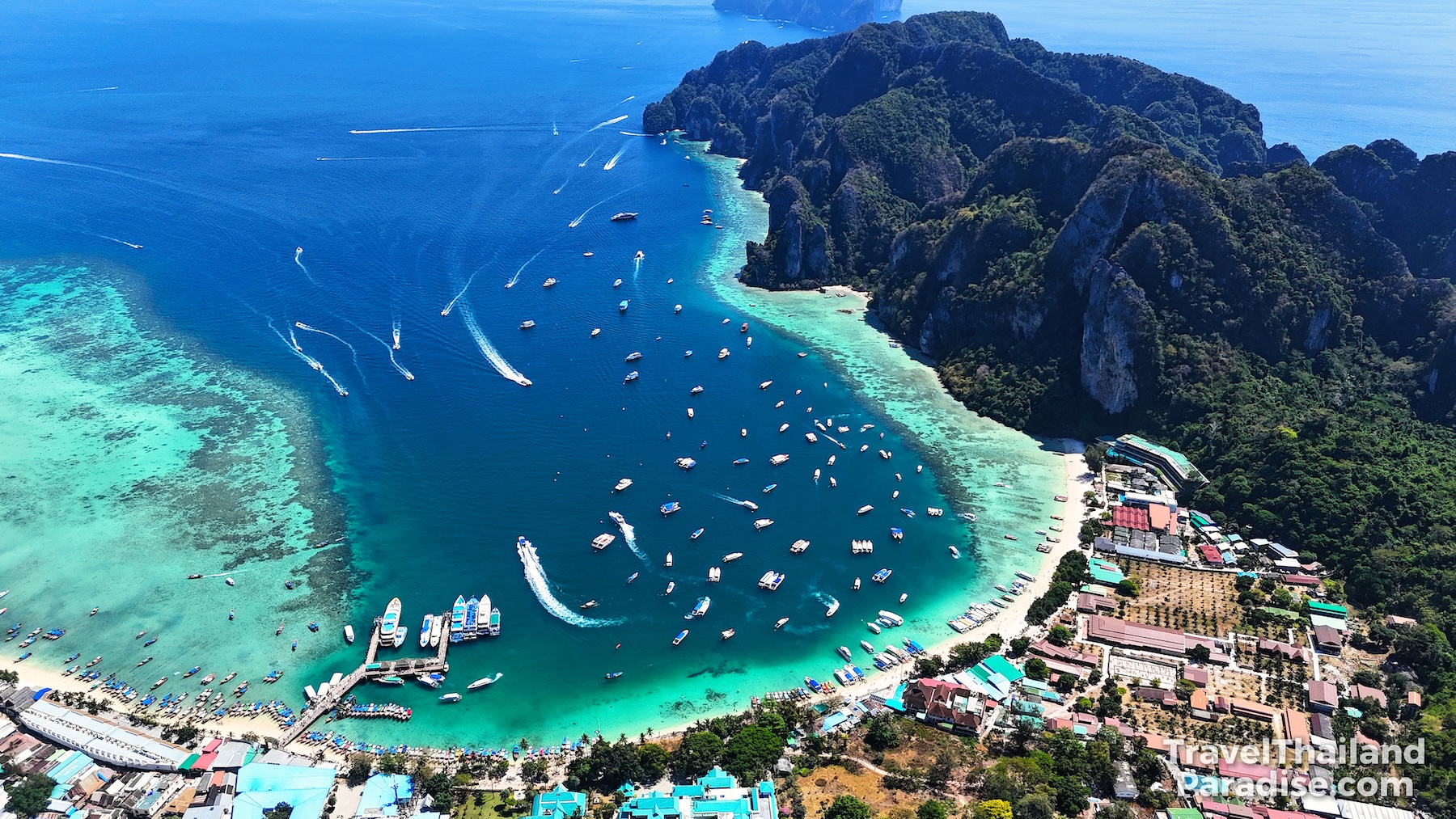
This Koh Phi Phi Don Thailand travel guide covers everything you need to know, from beaches and viewpoints to nightlife, travel tips, and real on-the-ground experience.
Phi Phi Don is one of Thailand’s most dynamic island destinations, offering far more than just beaches.
- The only inhabited island in the Phi Phi archipelago, offering a mix of dramatic scenery and vibrant island life
- A destination where towering limestone cliffs rise above clear turquoise water and soft white sand beaches
- Known for its unique contrast—peaceful mornings, energetic afternoons, and unforgettable nights
- The main gateway to iconic locations like Maya Bay and Phi Leh Lagoon
- A place where you can experience both laid-back island living and lively nightlife within walking distance
- Ideal for travelers who want more than just a beach—something dynamic, social, and constantly changing
There are destinations that impress instantly, almost like a postcard brought to life. And then there are places that take their time, revealing themselves slowly, piece by piece, until you realize you’re experiencing something far more complex than you expected.
Koh Phi Phi Don is one of those places.
At first, it might not feel like the tropical escape you imagined. The arrival is busy. Boats line the shore, engines hum in the background, and travelers step onto the island in waves, pulling luggage through narrow pathways. It feels active, almost chaotic for a moment.
But then something shifts.
As you move away from the pier, the noise softens. The paths become smaller, more personal. You begin to notice the details—the rhythm of island life, the scent of salt in the air, the way the cliffs seem to rise endlessly in the distance.
And that’s when Koh Phi Phi Don starts to make sense.
This isn’t just a place you visit for a single highlight. It’s an island that changes throughout the day.
Morning brings calm and quiet reflection. Afternoon fills the beaches with energy and movement.
And by night, the island transforms into something entirely different—vibrant, alive, almost electr
Koh Phi Phi Don isn’t about one moment. It’s about the constant shift between them.
Quick Navigation
The Arrival: First Steps Into Koh Phi Phi Don
The approach to Koh Phi Phi Don is something you don’t forget.
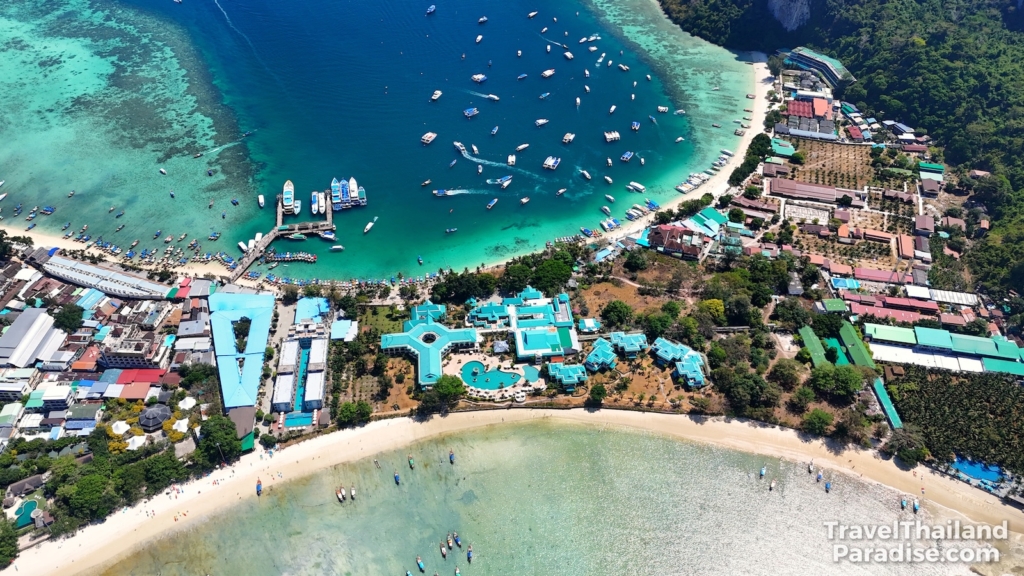
Long before you actually arrive, the island begins to take shape in the distance—rising out of the Andaman Sea like something almost unreal. Massive limestone cliffs appear first, dark and textured, cutting sharply into the sky.
As the boat moves closer, the color of the water starts to change. Deep blue slowly fades into a lighter turquoise, then into that almost transparent shade that makes it feel like the boat is floating above glass.
There’s a moment, just before docking, where everything feels perfectly balanced.
And then reality kicks in.
As the ferry pulls into Tonsai Pier, the stillness disappears almost instantly. Engines idle. Crew members shout directions. Travelers begin gathering their bags, preparing to step into something that feels very different from the peaceful image they had just minutes before.
Stepping onto the pier is your first real introduction to Koh Phi Phi Don—and it’s not quiet.
It’s movement. Constant movement.
People arriving, others leaving, long-tail boats weaving in and out of the bay, tour operators calling out destinations, luggage wheels rolling unevenly across wooden planks. For a brief moment, it can feel overwhelming, especially if you were expecting a calm, untouched island.
But this is where most people misunderstand Koh Phi Phi Don. Because what you see at the pier is only one side of it.
As soon as you leave the immediate harbor area and begin walking inward, everything starts to shift. The wide, open space of the pier gives way to narrow pathways. The noise fades slightly. Small shops line the walkways, followed by cafés, local restaurants, dive centers, and tucked-away guesthouses.
There are no cars here. No motorbikes rushing past you. Everything moves on foot.
And because of that, the island begins to feel smaller, more intimate, more connected.
Within just a few minutes of walking, the chaos of arrival softens into something more familiar—something easier to settle into. You start noticing the rhythm: the slow pace of travelers exploring, the sound of distant music drifting from somewhere deeper in the village, the occasional glimpse of the ocean appearing between buildings.
It doesn’t take long before the first impression changes completely.
What initially felt busy begins to feel alive.
And that distinction matters.
Because Koh Phi Phi Don isn’t trying to be isolated or untouched. It’s not that kind of island. Instead, it offers something different—a place where natural beauty and human energy exist side by side, constantly interacting, constantly shifting.
The arrival isn’t meant to be perfect.
It’s meant to introduce you to the contrast.
For many travelers, this is just the starting point before exploring nearby highlights like Maya Bay or the hidden waters of Phi Leh Lagoon.
First Impressions: When the Island Starts to Reveal Itself
Once you move beyond the initial arrival zone, Koh Phi Phi Don begins to feel like a completely different place.
The transition isn’t dramatic—it happens gradually, almost without you noticing at first. One moment you’re surrounded by the noise and motion of the harbor, and the next, you’re walking through narrow sandy paths where everything slows down just enough to take it in.
There’s no real structure to the island in the way you might expect. No large roads, no organized grid, no clear separation between “town” and “beach.” Instead, everything blends together. Small guesthouses sit next to cafés.

Beachfront restaurants spill directly onto the sand. Palm trees lean casually over walkways, as if they’ve grown around the movement of people rather than the other way around.
And that’s what makes the first impression so different.
It doesn’t feel designed. It feels organic.
You start to notice how close everything is. Within just a short walk, you can move from a quiet stretch of beach to a lively cluster of bars, then back again into a peaceful corner where the only sound is the water touching the shore. The island doesn’t separate experiences—it layers them.
What stands out most is the absence of traffic. No engines. No honking. No rush.
Everything happens at walking speed, and because of that, your awareness shifts. You notice details you would normally miss—the texture of the sand under your feet, the changing color of the water as clouds move overhead, the way the light reflects differently depending on the time of day.
And then there are the views.
No matter where you are, the cliffs are always present. Towering limestone formations rise behind the village, framing everything in a way that constantly reminds you that this island is part of something much larger, something shaped over thousands of years.
It creates a strange contrast.
On one hand, Koh Phi Phi Don feels social, energetic, almost busy in certain areas. On the other, it’s surrounded by raw, untouched natural beauty that feels completely indifferent to everything happening below.
That contrast becomes the identity of the island.
You’ll see it in the people too. Some are here to relax, spending hours on the beach without moving much at all. Others are constantly exploring—heading toward viewpoints, booking boat tours, moving from one side of the island to the other.
And then there are those who come for the nightlife, slowly transitioning their day into something entirely different after sunset.
All of it exists at the same time. And somehow, it works.
Because Koh Phi Phi Don isn’t trying to offer one type of experience.
It gives you multiple versions of the same place, depending on how you move through it.
The longer you stay, the more you begin to understand that your first impression was only the surface.
What the island really is… takes a little time to unfold.
Koh Phi Phi Don Thailand Travel Guide: What to Expect
One of the most fascinating things about Koh Phi Phi Don is how dramatically it changes throughout the day.
It’s not a subtle shift. It feels like two completely different islands sharing the same space.
In the early morning, everything is quiet.
The beaches are nearly empty, especially around Loh Dalum Bay. The water is calm, almost still, reflecting the soft light of the rising sun. Long-tail boats float gently without movement, anchored in place as if the island itself hasn’t fully woken up yet. The air feels cooler, lighter, carrying that clean ocean scent that only exists before the heat of the day sets in.
It’s the version of Koh Phi Phi Don that feels closest to untouched.
You can walk along the shoreline without interruption, hearing nothing but the sound of water moving slowly across the sand. Even the village feels different—shops just beginning to open, cafés preparing for the day, a quiet rhythm that feels almost peaceful compared to what’s coming later.
By midday, that calm begins to fade.
The island starts to fill with energy. Boats arrive from nearby islands, bringing in day-trippers heading toward viewpoints, beaches, and tours. The narrow pathways become busier. Restaurants fill up. Music starts to play in the background, subtle at first, then gradually more noticeable.
The beaches shift too.
Where there was space in the morning, now there are groups of people swimming, relaxing, taking photos, moving in and out of the water. It doesn’t feel overcrowded everywhere, but there’s definitely a sense that the island is fully alive now.
And then, slowly, the light begins to change.
Sunset is the turning point.
The sky softens, colors deepen, and the pace of the island starts to transition again. People gather along the beach, watching as the sun drops behind the cliffs, casting long shadows across the water. It’s one of those moments where everything seems to pause, even if just briefly.
And then night arrives.
This is where Koh Phi Phi Don reveals its second identity.
The quiet beaches transform into social spaces. Music becomes louder, more present. Beach bars light up the shoreline, and fire shows begin to draw crowds into the sand. What was calm and reflective in the morning becomes energetic and unpredictable at night.
But what makes it interesting isn’t just the nightlife itself.
It’s how optional it feels.
Because just a short walk away, you can still find quieter corners—places where the sound fades again, where the ocean becomes the dominant presence once more. The island doesn’t force you into one experience.
It lets you choose.
That’s what makes Koh Phi Phi Don different.
It doesn’t stay the same.
It evolves throughout the day, offering something new depending on when—and how—you experience it.
Beaches of Koh Phi Phi Don: Finding Your Own Space

One of the first things people search before coming here is simple:
“What are the best beaches in Koh Phi Phi Don?”
And the answer isn’t as straightforward as it might seem.
Because the beaches here don’t all offer the same experience.
They each feel like a different version of the island.
Loh Dalum Bay — The Social Side of the Island
This is the beach most people encounter first, and it perfectly reflects the island’s energy.
The water here is shallow, stretching far out during low tide, creating that soft turquoise color that almost looks unreal. It’s warm, calm, and inviting—more about relaxing and floating than serious swimming.
During the day, it feels lively but not overwhelming. Groups gather along the shore, people move in and out of the water, and long-tail boats sit anchored just far enough to complete the picture without disrupting it.
But this beach changes more than any other.
By night, Loh Dalum transforms into the center of the island’s nightlife. Fire shows, music, and beach bars take over the sand, turning what felt peaceful just hours earlier into something completely different.
It’s not just a beach. It’s an experience that evolves.
Long Beach — Where the Island Slows Down
If Loh Dalum represents energy, Long Beach represents escape.
Located just a short walk or boat ride away, this stretch of sand feels noticeably different the moment you arrive. The water is clearer, deeper, and better suited for swimming. You don’t need to walk far to find space, and the overall atmosphere feels calmer, more open.
This is where many travelers go when they want to step away from the busier side of the island without leaving it completely.
Snorkeling here is also one of the best accessible options on Koh Phi Phi Don. Even close to shore, you can spot fish moving through the water, especially on calmer days when visibility improves.
It’s not completely hidden—but it feels like a different world compared to the main bay.
Monkey Beach — A Different Kind of Encounter
Then there’s Monkey Beach.
Smaller, more secluded, and surrounded by cliffs, this spot feels more like a stop on an adventure rather than a place you settle into for hours.
As the name suggests, monkeys are part of the experience here.
They move along the shoreline and through the trees, often drawing attention from visitors arriving by boat. It adds something unexpected, something that makes the beach feel less predictable than others on the island.
But it’s important to keep a respectful distance. This isn’t a controlled environment—it’s still nature.
And that’s part of what makes it memorable.
Hidden Corners — The Beaches You Don’t Plan
Some of the best moments on Koh Phi Phi Don don’t happen on the well-known beaches.
They happen in between.
Small stretches of sand that aren’t marked on maps. Quiet corners you reach by simply walking a little further than most people do. Places where the sound fades again, and for a moment, it feels like you’ve stepped outside of the island’s more active areas.
These are the beaches you don’t search for.
You find them.
What makes Koh Phi Phi Don unique isn’t just the beauty of its beaches.
It’s the variety.
You’re not limited to one kind of experience. You can move between energy and calm, between social spaces and quiet escapes, all within a relatively small area.
And that freedom to choose—that’s what keeps the island from ever feeling one-dimensional.
And while these quieter spots feel untouched, many visitors also combine their trip with iconic locations like Phi Leh Lagoon, known for its enclosed emerald waters.
The Viewpoint: Seeing Koh Phi Phi Don From Above
There’s a moment on Koh Phi Phi Don when everything suddenly makes sense.
And it doesn’t happen at the beach. It happens above it.
The viewpoint is one of the most talked-about experiences on the island, but what most people don’t realize is that it’s not just about the view itself—it’s about what the view reveals.
Getting there takes a bit of effort.
The path starts not far from the main village, gradually leading you upward through a mix of concrete steps and shaded jungle sections. At first, it feels manageable. Then the incline increases. The air becomes heavier, especially in the heat of the day, and each step starts to demand more attention.
It’s not a long hike. But it’s enough to make you slow down. And that’s part of the experience.
Because as you climb, the sounds of the island begin to fade. The music, the voices, the movement—all of it becomes more distant with each step. What replaces it is something quieter. More grounded. The rustle of leaves, the occasional call of birds, the steady rhythm of your own pace.
Then you reach the top. And everything opens up.
From above, Koh Phi Phi Don looks completely different. What felt like separate places—beaches, village paths, hidden corners—suddenly come together into one clear picture. You see the narrow strip of land connecting the two sides of the island, with water on both sides forming that iconic twin-bay shape.
On one side, the calm turquoise of Loh Dalum Bay. On the other, the deeper blue of Tonsai Bay.
It’s a perspective you can’t fully understand from the ground.
Up here, the island feels smaller—but also more complete.
You begin to see how everything fits together.
The movement, the energy, the contrast between quiet and busy areas—it all becomes part of a single landscape rather than separate experiences.
And then there’s the timing.
Sunset is when the viewpoint reaches its peak.
As the sun begins to drop, the light softens and spreads across the island, casting warm tones over the cliffs and water. The colors shift slowly, almost subtly, until the entire scene feels like it’s glowing. It’s one of those moments where people naturally go quiet—not because they have to, but because the view holds their attention completely.
But here’s something important. The viewpoint isn’t just about taking a photo. It’s about understanding where you are.
Because once you’ve seen Koh Phi Phi Don from above, everything below starts to feel more connected. The paths make more sense. The beaches feel more intentional. Even the movement of people across the island seems easier to follow.
It gives you context.
And that changes how you experience the rest of your time there.
Nightlife on Koh Phi Phi Don: When the Island Changes Again
If you only experienced Koh Phi Phi Don during the day, you would leave with one version of the island.
But that wouldn’t be the full picture.
Because once the sun disappears, something shifts again—just as dramatically as it did in the morning.
It doesn’t happen all at once.
At first, it’s subtle.
Restaurants begin to fill. Lights come on one by one along the beach. Music, which was barely noticeable during the day, starts to take on more presence. You hear it before you fully see it—soft beats drifting through the air as people slowly move toward the shoreline.
Then, almost without realizing it, you’re part of it.
The beach that felt calm hours earlier begins to transform into a social space. Tables extend closer to the sand. Bars become more active. Groups gather, moving between places, deciding where to stay and where to go next.
And then the fire shows begin.
They’re impossible to miss.
Performers step onto the sand, spinning flames through the air with a precision that feels both controlled and unpredictable at the same time. Circles of light form against the darkness, reflecting off the water, drawing attention from everyone nearby. For a moment, everything else fades into the background.
It’s not just entertainment. It becomes part of the atmosphere.
As the night goes deeper, the energy builds.
Music grows louder. The pace picks up. What started as a relaxed evening turns into something more dynamic, more fluid. People dance barefoot on the sand. Others sit just far enough away to watch without fully stepping into it.
And that’s what makes nightlife here different.
You’re never locked into one experience.
You can be in the middle of it—surrounded by music, movement, and energy—or you can step away within minutes and find a quieter stretch where the sound fades back into the distance.
That flexibility changes everything.
Because Koh Phi Phi Don doesn’t force a single version of nightlife on you. It lets you decide how much of it you want.
Some travelers stay out until late, moving from one beach bar to another, letting the night unfold without much structure. Others take a slower approach—dinner by the water, a short walk along the shore, maybe stopping to watch a fire show before heading back.
Both feel natural. Both feel right.
And that balance is what defines the experience.
It’s not just about partying. It’s about how the island continues to evolve, even after the day has ended.
By the time the night begins to quiet down again, when the music fades and the crowds thin out, there’s a brief window where everything feels still again—almost like a reset.
And within a few hours, the cycle starts over.
Morning returns.
And Koh Phi Phi Don becomes something entirely different once more.
Practical Guide: Planning Your Trip to Koh Phi Phi Don
After experiencing the atmosphere, energy, and natural beauty of Phi Phi Don, the practical side of planning becomes much easier to understand.
Because this isn’t just a place you visit—it’s a place you move through differently.
How to Get to Koh Phi Phi Don
Koh Phi Phi Don is only accessible by boat. There are no airports, no bridges, and no shortcuts.
Most travelers arrive from either Phuket or Krabi, with ferries running daily between these locations and the island.
- From Phuket: around 2 hours by ferry
- From Krabi: around 90 minutes
- Speedboats are faster, but less stable depending on sea conditions
The journey itself is part of the experience. As you approach the island, the dramatic cliffs begin to appear, giving you that first glimpse of what’s waiting ahead.
Where to Stay on Koh Phi Phi Don
Choosing where to stay will shape your entire experience.
The island may look small on a map, but different areas feel completely different in terms of atmosphere.
- Tonsai Village
The most central and active area. Close to restaurants, bars, and the main pier. Ideal if you want convenience and easy access to everything. - Loh Dalum Area
Best if you want to be close to the beach and nightlife. This is where the island’s energy is strongest after sunset. - Long Beach
A quieter alternative. More space, clearer water, and a more relaxed environment. Perfect if you want to step away from the busiest areas. - More remote resorts
Accessible mainly by boat. These offer a more secluded experience, often with stunning views and minimal crowds.
There are no cars on Koh Phi Phi Don.
So wherever you stay, you’ll be walking—with luggage included.
That’s something many travelers underestimate.
Getting Around the Island (Walking Through Phi Phi Don)

Movement here is simple. Everything happens on foot or by boat.
- Walking is the main way to explore
- Long-tail boats act as taxis for harder-to-reach beaches
- No cars, no motorbikes, no traffic
This changes the pace of your entire trip. You don’t rush from place to place—you move through it.
Costs and Budget Expectations
Koh Phi Phi Don is not the cheapest destination in Thailand, but it’s also not overly expensive if you plan correctly.
- Accommodation: varies widely depending on location and comfort level
- Food: affordable local options + higher-end beachfront dining
- Tours: island hopping, snorkeling, and boat trips to places like Maya Bay and Phi Leh Lagoon are widely available
- Extras: viewpoint entry fee, long-tail boat rides, nightlife spending
Prices are slightly higher than mainland destinations due to the island’s location and logistics.
How Many Days Do You Need?
This is one of the most common questions:
How many days should you stay in Koh Phi Phi Don?
- 1 day → not enough (too rushed)
- 2 days → covers basics
- 3–4 days → ideal balance
- 5+ days → for a slower, more immersive experience
The island reveals itself gradually. Rushing through it means missing what makes it special.
Is Koh Phi Phi Don Worth Visiting?
Yes—but only if you understand what it offers.
This is not a quiet, untouched island.
It’s a place where:
- Nature meets energy
- Relaxation meets nightlife
- Simplicity meets movement
If you’re expecting complete isolation, this may not be the right destination.
But if you’re looking for variety, atmosphere, and one of the most visually striking islands in Thailand, Koh Phi Phi Don delivers in a way few places can.
Best Time to Visit Koh Phi Phi Don + Travel Tips You Shouldn’t Ignore
Timing can completely change your experience on Koh Phi Phi Don. The island doesn’t just look different depending on the season—it feels different.
Best Time to Visit Koh Phi Phi Don
The ideal time to visit is during the dry season:
- November to April
During these months, the weather is more stable, the sea is calmer, and visibility in the water is significantly better. This is when the island shows its most vibrant colors—the kind you see in photos that almost don’t look real.
But there’s a trade-off.
This is also peak season.
That means:
- More visitors
- Higher accommodation prices
- Busier beaches, especially around Loh Dalum
If you’re visiting during this time, the key is not to avoid the crowds—but to move differently within them. Early mornings and late afternoons become your advantage.
Shoulder Season — The Underrated Option
f you’re looking for a better balance between weather and crowd levels:
- May and October
These months sit between peak and rainy season.
You may encounter occasional rain, but it’s usually short and doesn’t dominate the entire day. In return, you get:
- Fewer people
- Lower prices
- A more relaxed version of the island
For many travelers, this ends up being the best overall experience.
Rainy Season — A Different Perspective
- June to September
This is the least predictable period.
Rain becomes more frequent, sea conditions can change quickly, and some boat tours may be limited depending on the weather.
But here’s something many people don’t consider:
The island becomes quieter.
The dramatic skies, shifting light, and fewer crowds create a completely different atmosphere—one that feels more raw, more natural, and less influenced by tourism.
It’s not the classic Phi Phi experience.
But it’s still a valid one.
Travel Tips That Make a Big Difference
Some things on Koh Phi Phi Don are easy to overlook—but they can shape your experience more than expected.
Start your day early
Morning is when the island feels its most peaceful. Beaches are quieter, temperatures are lower, and the overall atmosphere is completely different.
Choose your location carefully
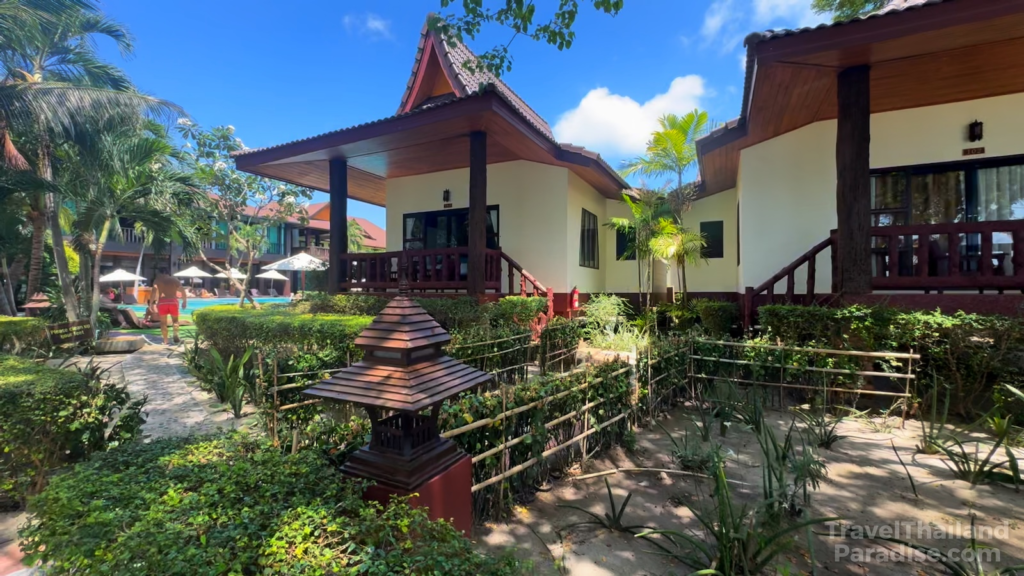
Where you stay matters more here than on most islands. A difference of a few minutes walking can completely change your experience from quiet to energetic.
Pack light
There are no vehicles. You will be walking with your luggage, often on uneven paths.
Stay hydrated and prepared for heat
The combination of humidity and walking can be more intense than expected.
Use boats strategically
Long-tail boats aren’t just for tours—they’re also your shortcut to quieter beaches.
Common Mistakes to Avoid
Some expectations don’t match reality—and that’s where disappointment usually starts.
Expecting a completely quiet island
Koh Phi Phi Don has energy. It’s part of its identity. If you’re looking for total isolation, there are better alternatives elsewhere in Thailand.
Staying too short
Many visitors come for one night and leave feeling like they missed something. That’s because they did.
The island takes time to understand.
Only seeing the main areas
If you stay near the pier and never explore beyond it, you’re only experiencing a small part of what Koh Phi Phi Don offers.
Ignoring timing
Crowds aren’t constant—they shift throughout the day. Adjusting your schedule makes a huge difference.
Koh Phi Phi Don rewards those who adapt. Not just to the place itself—but to its rhythm.
Final Thoughts: Is Koh Phi Phi Don Worth It?
Koh Phi Phi Don is not a place you fully understand in a single moment. It’s not defined by just one beach, one viewpoint, or one experience.
It’s defined by contrast.
The balance between calm mornings and energetic nights. Between quiet corners and social spaces.
Between raw natural beauty and the constant movement of people passing through it.
At first, it can feel busy.
But the longer you stay, the more that feeling shifts into something else—something more layered, more intentional. You begin to notice the rhythm, the way different parts of the island reveal themselves depending on the time of day, the choices you make, and how far you’re willing to explore.
And that’s where Koh Phi Phi Don stands out.
It doesn’t try to be one thing.
It gives you options.
You can spend your time chasing viewpoints, discovering hidden beaches, and moving constantly from place to place. Or you can slow down completely, staying in one spot long enough to let the island come to you.
Both experiences are valid.
Both feel complete.
So, is Koh Phi Phi Don worth visiting?
Yes—but not for the reason most people expect.
Not because it’s perfect.
But because it’s dynamic.
And that’s what makes it memorable long after you leave.
For official updates, visa requirements, you can also check the Tourism Authority of Thailand website.


